Gold Jewellery Making Machine for Modern Jewellery Production
If you are planning to expand gold jewellery production, the machine you choose affects output, finish quality, metal loss, labour efficiency, and maintenance cost from day one. A well-designed setup helps small workshops, growing brands, and established manufacturers produce more consistent bangles, chains, rings, casting parts, and coin blanks without wasting time on repeated adjustment. For buyers comparing Gold Jewellery Making Machine, the real question is not just price. It is how reliably the machine performs across daily Indian shop-floor conditions, from Surat and Mumbai to Ahmedabad and Jaipur.
Why Choose H.K Malvi Industries for Gold Jewellery Making Machine
The first thing serious buyers check is engineering depth. H.K Malvi Industries has been part of this sector since 1968, with roots built by Mr. Himmatram K. Malvi and present leadership under Mr. Shyam Malvi, CEO. That continuity matters because jewellery machinery is not a catalog business alone. It depends on years of practical correction, tool design, pressure balancing, roll alignment, finish control, and after-sales support across real production environments in Delhi, Hyderabad, Chennai, and Kolkata.
Yes, buyers also look for confidence signals beyond a brochure. The company operates from Ahmedabad, follows ISO 9001:2015 aligned manufacturing processes, and has supplied 1000+ custom jewellery and minting machinery solutions with export reach across 20+ countries. That gives useful perspective when a client needs one standalone gold rolling machine, a wire drawing machine, or a broader gold jewellery making machine in Ahmedabad solution with room for future expansion.
Another practical reason is range compatibility. In many units, one machine decision affects the next. If your rolling stage, pressing stage, and material flow do not match, even a good operator will struggle. That is why many buyers searching for jewellery making machine manufacturers near me eventually focus on suppliers who understand line integration, not just individual machine dispatch.
Our Gold Jewellery Making Machine Manufacturing Capabilities
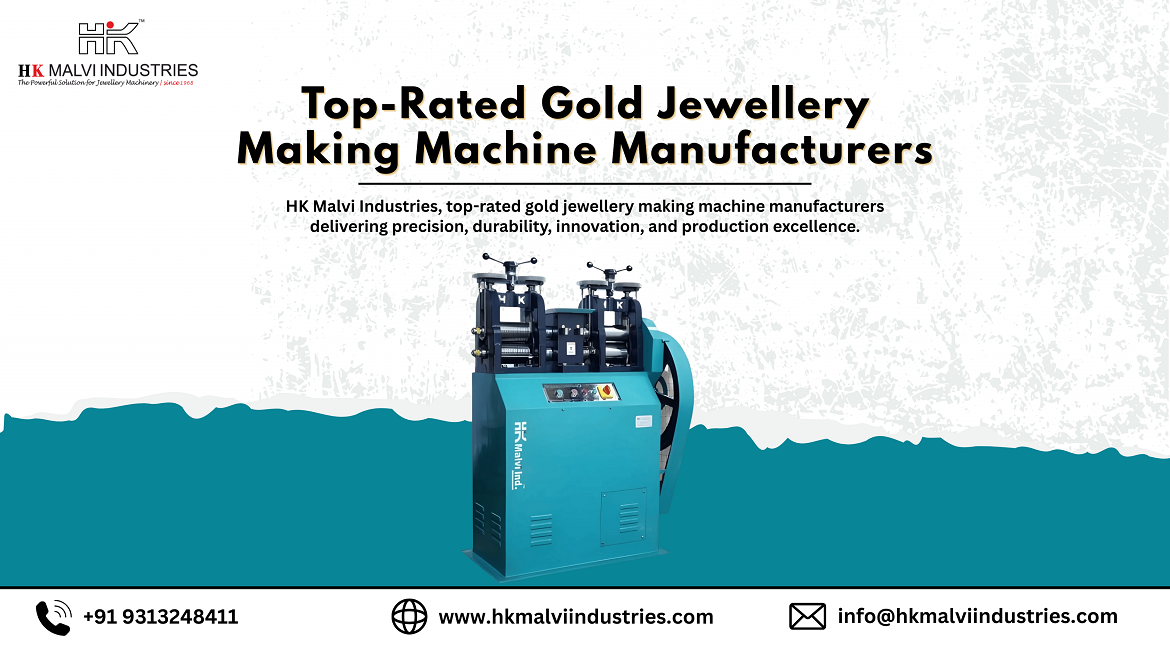
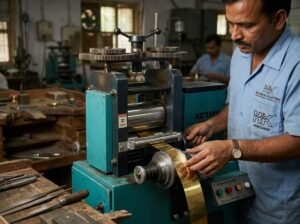
Here’s how H.K Malvi Industries supports different production needs. A gold jewellery making setup may include a gold rolling machine for sheet reduction, a wire drawing machine for controlled wire sizes, a gold casting machine interface for upstream production, and hydraulic systems for coin and bar applications. For workshops in Bangalore, Pune, and Indore, this often starts with one or two critical machines and grows into a cleaner jewellery plant setup over time.
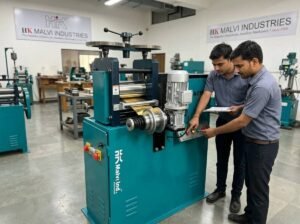
The most common requirement is precise rolling. Thickness variation of even a small margin can create polishing problems, weight mismatch, and rejection during later operations. Buyers comparing double head sheet rolling machine options usually want stable pressure, smoother sheet finish, and better repeatability over long runs. In gold work, consistency saves more money than speed claims ever do.
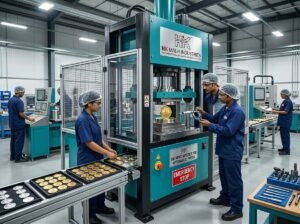
Yes, we provide practical configuration thinking for mixed-use production as well. Some clients manufacture chain components, some produce sheet for bangles, and some work on commemorative pieces or bullion-linked products. In such cases, a hydraulic press machines for gold silver coins bars line can complement jewellery operations, especially where coin blanks, bars, or medallion-type products are involved.
A small example from western India explains this well. One family-run unit had good karigars but poor workflow. Their old machine needed repeated manual correction, so sheet width would drift and operators lost time after every batch. After moving to precision jewellery equipment designed for their actual production size, they reduced adjustment stoppages sharply. That is the difference between buying machinery and buying process fit.
In India, demand is no longer limited to large factories. Startups in Vadodara, boutique brands in Chandigarh, and legacy goldsmith units in Jaipur now ask for custom jewellery machinery India solutions because space, power availability, manpower skill, and target product mix all vary. This is where experienced machinery planning becomes useful.
Get a Quote for [Gold Jewellery Making Machine]
Navigating Quality Standards & Precision Engineering
The best machine is the one that keeps output stable across months, not just during a demo. For that, quality standards must cover frame rigidity, roll hardness, tolerance control, motor performance, safety, finish quality, and service access. Buyers often ask whether local assembly is enough. It is not. In gold jewellery machinery, even small looseness can affect sheet uniformity, wire diameter, and downstream finishing.
Here’s what smart manufacturers usually evaluate before purchase:
- Material handling accuracy
- Pressure consistency under repeat loads
- Ease of die or roll maintenance
- Power efficiency for daily use
- Availability of spare and support response
- Customization for product type and plant size
The city also plays a role. Ahmedabad has become a strong engineering base because it combines fabrication capability, industrial supply chains, and practical machinery know-how. If you want context on this manufacturing ecosystem, the article on why Ahmedabad leads gold jewellery machine production gives a useful industry view without guesswork.
Another common question is whether one supplier can support both jewellery and minting needs. In many cases, yes. A capable minting machinery supplier can also understand pressing force, repeatability, surface quality, and production sequencing relevant to jewellery-grade applications. That crossover knowledge becomes valuable when a unit wants both ornament production and a coin minting plant setup India model under one roof.
Local Manufacturers vs H.K Malvi Industries
Here is a practical comparison buyers often use before shortlisting a supplier. It is not about hype. It is about what affects ownership experience after installation.
|
Evaluation Factor |
Typical Local Supplier |
**H.K Malvi Industries** |
|---|---|---|
|
Legacy and sector experience |
Often limited or unclear |
Established in 1968 with 56+ years of legacy |
|
Leadership visibility |
Not always transparent |
Founded by Mr. Himmatram K. Malvi; led by Mr. Shyam Malvi |
|
Product customization |
Basic modifications only |
1000+ custom jewellery and minting machinery solutions delivered |
|
Engineering depth |
May focus on fabrication |
Precision engineering with process-focused design |
|
Export capability |
Often domestic only |
Trusted exporter to 20+ countries |
|
Support after installation |
Can be inconsistent |
Known for after-sales support and application guidance |
For buyers comparing jewellery machine manufacturer in India options, this kind of table is more useful than broad claims. It helps identify whether the supplier understands metal behaviour, production reality, and long-term operating value.
Step-by-Step Process – How We Deliver Gold Jewellery Making Machine
Here’s how a proper supply process should work when you order goldsmith machinery or a full jewellery line.
1. Requirement mapping
The discussion starts with product type, daily output, metal form, operator skill, and factory constraints. A client in Mumbai making chain wire has a different need than a unit in Chennai producing temple jewellery sheet.
2. Machine matching
The right configuration is selected based on rolling width, reduction need, motor load, finish expectation, and future expansion. This is where buyers asking for a gold jewellery machinery manufacturer in Ahmedabad usually need technical clarity, not just a quotation.
3. Design and build
Machine components are fabricated, aligned, assembled, and checked for operating stability. For custom requirements, design changes are incorporated before final dispatch.
4. Testing and inspection
The machine is run for functional checks, motion accuracy, and repeat performance. This step is especially important for precision jewellery equipment and integrated coin minting plant applications.
5. Dispatch, installation, and support
After delivery, installation guidance and operator support help reduce early misuse. That matters because even a good machine suffers if it is overloaded, dry-run incorrectly, or maintained poorly.
For a broader view of available machines and company capabilities, buyers can review the H.K Malvi Industries homepage and compare product categories before making a final shortlist.
Real Client Case Study
Here’s how one real-world style case usually looks. A mid-sized jewellery unit in Surat, which we will call Client R, was producing lightweight bangles and sheet-based components. Their challenge was uneven thickness, high rework, and too much dependence on one senior operator. They also planned to add coin-style festive products later, so future compatibility mattered.
The approach was simple. Instead of buying a generic machine, they evaluated capacity, target thickness range, and expected monthly growth. A more suitable gold rolling machine setup was introduced, along with recommendations for workflow sequencing and maintenance habits. Within a few months, rejection dropped, production planning improved, and operator dependency reduced because settings became more repeatable.
A smaller mini success story came from a workshop in Delhi. The owner had delayed investment for nearly a year because local quotes looked cheap but support terms were unclear. Once he shifted to a precision-led machine selection process, he found that lower downtime mattered more than lower initial price. That is a common lesson in jewellery machinery Ahmedabad and across India.
FAQs
1. What machine is needed to start gold jewellery production?
It depends on your product line. Most units begin with rolling, wire processing, or casting-linked equipment, then add pressing or finishing machines as production grows.
2. Is a gold rolling machine enough for a small workshop?
For some workshops, yes. If you mainly produce sheet or basic components, it can be the core machine. But many units later need a wire drawing machine or hydraulic press as well.
3. How do I choose between local fabrication and engineered machinery?
Check tolerance consistency, support, component quality, and maintenance ease. Engineered machinery usually offers better repeatability and lower rework over time.
4. Can one supplier support jewellery and minting applications?
Yes, if the supplier has experience with both jewellery machinery and pressing systems for coins or bars.
5. Why is Ahmedabad important for jewellery machinery?
Ahmedabad has a strong industrial base, skilled fabrication ecosystem, and long-standing machinery expertise, which supports faster customization and service.
6. Do customized machines really help small manufacturers?
Yes. Customization can improve floor use, output fit, operator comfort, and future expansion planning, especially in compact units.
7. What should I ask before buying a gold jewellery machine?
Ask about production suitability, material range, maintenance, spare availability, testing, delivery scope, and support after installation.
Conclusion
A gold jewellery making machine should be selected like a production asset, not like a one-time purchase. The right setup improves consistency, reduces metal loss, supports scale, and makes daily work easier for operators and owners alike. If you are reviewing options for jewellery plant setup, minting support, or standalone gold jewellery machinery, focus on engineering fit, service reliability, and long-term usability.
For a practical next step, request a Free Machinery Consultation, ask for the Download Jewellery Machinery Cost Guide, or connect on WhatsApp to discuss your production requirement. You can also reach the team at info@hkmalviindustries.com or visit the Ahmedabad facility at C/1/507, GIDC Industrial Area, Near New Odhav Water Tank, Odhav, Ahmedabad, Gujarat 382415, India.