Gold chain making is not only about speed; it is about repeatable quality, low metal loss, smooth wire flow, stable forming, and a machine line that suits the way Indian workshops actually work. For manufacturers scaling from handmade chains to semi-automatic or fully integrated production, the right setup can reduce rejection, improve finish, and make daily output more predictable. At H.K Malvi Industries, many enquiries for chain production also connect with upstream equipment like the Gold Chain Making Machine, because chain quality often starts with proper rolling, thickness control, and material consistency before forming begins.
Why Choose H.K Malvi Industries for Gold Chain Making Machines
Yes, practical buyers usually compare machine strength, service response, tool life, and process understanding before anything else. That is where H.K Malvi Industries stands on solid ground. Established in 1968, the company was founded by Mr. Himmatram K. Malvi and is currently led by Mr. Shyam Malvi, CEO. Over the years, the team has delivered 1000+ custom jewellery and minting machinery solutions backed by 60+ years of hands-on engineering experience.
For a chain manufacturer in Ahmedabad, Surat, or Mumbai, the real question is simple: will the machine run steadily in local production conditions? In my experience, jewellery units in Delhi, Jaipur, and Kolkata often need machines that can handle long shifts, operator variation, and frequent design changes without constant readjustment. That is where precision engineering, stable drive systems, and practical after-sales support matter more than brochure claims.
Buyers searching for Jewellery Making Machine Manufacturers are usually not looking for a generic machine. They want guidance on gauge range, output capacity, metal compatibility, die tolerance, and future expansion. For example, a growing unit in Hyderabad may begin with lightweight chain production, while a workshop in Chennai may focus on stronger daily-wear patterns for retail orders. The machinery specification should reflect that difference.
Another reason professionals consider this company is process range. Chain making does not exist in isolation. It links with gold rolling machine operations, wire drawing machine stages, gold casting machine support systems, dies, moulds, and in some cases broader jewellery plant setup planning. That cross-process understanding is valuable for any business investing in gold jewellery machinery rather than just one standalone unit.
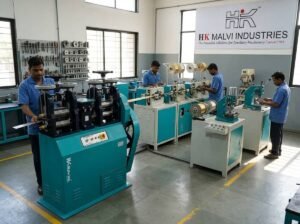
Our Gold Chain Making Machine Manufacturing Capabilities
Here’s how a practical machinery partner should approach chain manufacturing equipment: first understand the product mix, then build around consistency, maintenance access, and metal recovery. H.K Malvi Industries works with clients who need compact production lines, custom jewellery machinery, and integrated solutions for goldsmith machinery, minting machinery supplier requirements, and precision jewellery equipment.
A typical chain-making setup may involve wire preparation, controlled feeding, link formation, joining support, sizing, and finishing compatibility. If forming tension is unstable, breakage increases. If alignment is poor, rejection rises. This is why many serious buyers also study upstream systems like jewellery making machines in India before finalizing a production line.
From Bangalore startups to mature manufacturers in Pune and Vadodara, clients often ask similar questions:
- Can the machine support multiple chain styles?
- Is it suitable for different gold purity ranges?
- What is the expected output per shift?
- How easy is operator training?
- Can the system be tailored for future expansion?
The short answer is yes, if the machine is designed with actual production logic in mind. A reliable chain line should allow repeat settings, clean access to wear parts, controlled vibration, and manageable servicing. This matters even more for units that also operate coin minting plant machinery, sheet processing, or wire reduction lines under one roof.
For buyers comparing a Gold Jewellery Machinery Manufacturer in Ahmedabad, the advantage of local engineering depth is practical communication. Design changes, tool adjustments, and service discussions move faster when the manufacturer understands Indian production realities, local workforce patterns, and regional supply timelines.
As a small example, one workshop owner from Indore told me his earlier machine looked good at dispatch but became difficult after three months because consumables were hard to source and settings were too sensitive. That is common in this sector. A machine should not only run well on day one; it should remain manageable in normal shop-floor conditions.
Navigating Quality Standards & Precision Engineering
The best machine performance comes from disciplined manufacturing, not guesswork. For gold chain making, quality starts with frame rigidity, roller and guide precision, drive stability, and dimensional control across repeated cycles. Even a slight variation in feed or tension can show up later as chain inconsistency, soldering issues, or finishing loss.
H.K Malvi Industries follows ISO 9001:2015 aligned manufacturing processes, which is important because jewellery machinery Ahmedabad buyers increasingly want documented quality thinking, not only verbal assurance. The company is also a trusted exporter to 20+ countries, and export readiness usually reflects stronger attention to fit, repeatability, and packaging discipline.
This is also where related tooling becomes important. Dies and moulds must maintain profile accuracy over time. If your operation also includes coin or bar work, compatible tooling support matters. That is why some buyers evaluating chain lines also review dies and moulds for coins and bars to understand the broader engineering quality behind the product range.
People Also Ask style questions come up naturally here, so let me answer a few directly:
A gold chain making machine is used to form, shape, and support the production of chains from processed wire with consistent dimensions.
Yes, machine quality directly affects metal wastage, because poor alignment and unstable forming can increase breakage and rejection.
The right setup depends on chain type, output target, wire gauge, and whether your unit handles only chains or a wider jewellery plant setup.
Maintenance is not difficult when wear parts are accessible and the machine is designed for routine cleaning, lubrication, and calibration.
Indian manufacturers in Chandigarh, Surat, and Ahmedabad often prefer customized systems because local order patterns change quickly.
If you are planning expansion, this is a good point to review hydraulic press machines for gold silver coins bars as well, especially if your business mixes jewellery and minting output.
Get a Quote for [Gold Chain Making Machine]
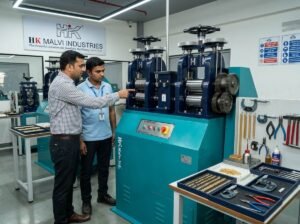
Local Manufacturers vs H.K Malvi Industries (Comparison Table)
Here’s a practical comparison buyers often make before placing an order.
|
Comparison Point |
Typical Local Supplier |
**H.K Malvi Industries** |
|---|---|---|
|
Legacy and engineering background |
Often limited or product-specific |
Established in 1968 with broad jewellery and minting machinery experience |
|
Customization ability |
Standard models only |
Custom solutions based on output, product mix, and plant needs |
|
Understanding of full production flow |
Limited to one machine |
Experience across rolling, pressing, tooling, minting, and jewellery production |
|
Export and process maturity |
May vary |
Trusted exporter to 20+ countries with ISO-aligned processes |
|
After-sales practicality |
Inconsistent follow-up |
Structured support, application guidance, and long-term usability focus |
Many buyers also study technical background articles such as jewellery manufacturing machines in Ahmedabad and export-facing process insights like gold rolling machine exporter before making a decision.
Step-by-Step Process – How We Deliver Gold Chain Making Machines
Here’s how a well-managed machinery delivery process should work.
First comes requirement mapping. The team studies chain style, target production, shift pattern, available space, electrical conditions, and operator skill level. This step is where many future problems are prevented.
Second is application matching. If your business also runs gold jewellery machinery for bangles, bars, findings, or minting lines, the machine should fit the broader production flow rather than become a stand-alone bottleneck.
Third is engineering and build planning. Machine dimensions, tooling arrangement, feed system design, and maintenance access are finalized based on your production reality.
Fourth is testing and inspection. Trial runs help verify output consistency, handling stability, and machine response before dispatch.
Fifth is installation guidance and operator familiarization. This matters a lot for businesses moving from manual work to semi-automatic production.
Sixth is support after commissioning. That includes wear-part guidance, preventive maintenance advice, and adjustment support when product mix changes.
A mini client success story explains this well. A family-run jewellery unit in Jaipur was producing lightweight chains with high manual dependency. After shifting to a more structured machine setup, they did not just improve speed. Their main gain was consistency. Rework dropped, sizing variation reduced, and operator confidence improved within weeks. That is often the real benefit buyers feel first.
Real Client Case Study
Here’s how one realistic Indian case can be understood. A medium-sized manufacturer from Mumbai, whom I will call Client R, wanted to increase chain output for wholesale supply in Delhi and Hyderabad. Their old system caused uneven link formation and too much stoppage during longer shifts. They also planned to add supporting equipment over time as part of a phased jewellery plant setup.
After evaluating capacity, wire condition, floor layout, and manpower, a tailored recommendation was made with attention to forming stability and service practicality. The client also asked for broader guidance, so they were advised to use the available Free Machinery Consultation and to Download Jewellery Machinery Cost Guide before final budgeting. WhatsApp coordination helped speed up drawings, production clarifications, and installation planning.
Within the first production cycle after commissioning, Client R reported better repeatability and smoother workflow between wire preparation and chain formation. More importantly, supervisors spent less time correcting alignment-related issues. For a business handling tight delivery dates, that is a meaningful operational improvement.
FAQs
1. What is a gold chain making machine used for?
It is used to form and support chain production from prepared wire with better speed, consistency, and dimensional control.
2. Is a gold chain making machine suitable for small jewellery workshops?
Yes. Smaller units can choose compact or semi-automatic setups based on output and budget.
3. How do I choose the right machine capacity?
Select capacity based on chain style, wire gauge, daily target, manpower, and future expansion plans.
4. Does machine quality affect gold wastage?
Yes. Stable alignment, proper feed control, and good tooling can reduce avoidable wastage.
5. Can one manufacturer support other jewellery equipment too?
Yes. That is useful when you need integrated planning for rolling, tooling, pressing, or minting support.
6. Why do buyers prefer an experienced Indian manufacturer?
Because local production understanding, easier communication, and practical service support help over the long term.
7. How can I enquire about pricing and setup guidance?
You can contact the company for technical discussion, WhatsApp follow-up, Free Machinery Consultation, and a cost guide before final planning.
Contact: +91-98250 00000 | info@hkmalviindustries.com
Address: C/1/507, GIDC Industrial Area, Near New Odhav Water Tank, Odhav, Ahmedabad, Gujarat 382415, India