Gold Wire Drawing Machine: What Indian Jewellery Manufacturers Should Check Before Buying
A well-built Gold Wire Drawing Machine affects more than wire size. It shapes daily output, metal recovery, finish consistency, operator effort, and long-term maintenance cost. For workshops producing chains, bangles, findings, and lightweight components, even a small variation in drawing accuracy can create rework at later stages. If you are comparing options for a new line or expanding an existing setup, it helps to start with the right machine category and process flow. For reference, you can review the related wire and sheet rolling machines range used alongside wire reduction lines in many jewellery units.
Why Choose H.K Malvi Industries for Gold Wire Drawing Machine
The practical reason many buyers evaluate H.K Malvi Industries is not only legacy, but process understanding. Established in 1968 and founded by Mr. Himmatram K. Malvi, the company has grown through actual shop-floor engineering work, not catalog trading. Today, under the leadership of Mr. Shyam Malvi, the Ahmedabad-based team supports jewellery manufacturers, minting units, and plant planners with machinery that fits production conditions common in Ahmedabad, Surat, Mumbai, Delhi, and Jaipur.
Yes, experience matters more in wire drawing than many first-time buyers expect. A machine may look strong from the outside, but die alignment, roll balance, motor stability, lubrication design, and tension control decide whether you get smooth output or frequent breakage. In Indian workshops, where operators often run long shifts and multiple metal batches, a forgiving and stable setup reduces waste.
This is also why buyers searching for gold jewellery machinery manufacturer in Ahmedabad usually ask very practical questions first: How much variation will come in final gauge? Can the machine handle repeated daily use? How quickly are spares available? These are sensible questions.
With over 56 years of legacy, 1000+ custom jewellery and minting machinery solutions delivered, ISO 9001:2015 aligned manufacturing processes, and exports to 20+ countries, H.K Malvi Industries brings the kind of engineering history many production owners want before committing capital. If you want broader background on the company’s segment expertise, see jewellery making machine in Ahmedabad.
Our Gold Wire Drawing Machine Manufacturing Capabilities
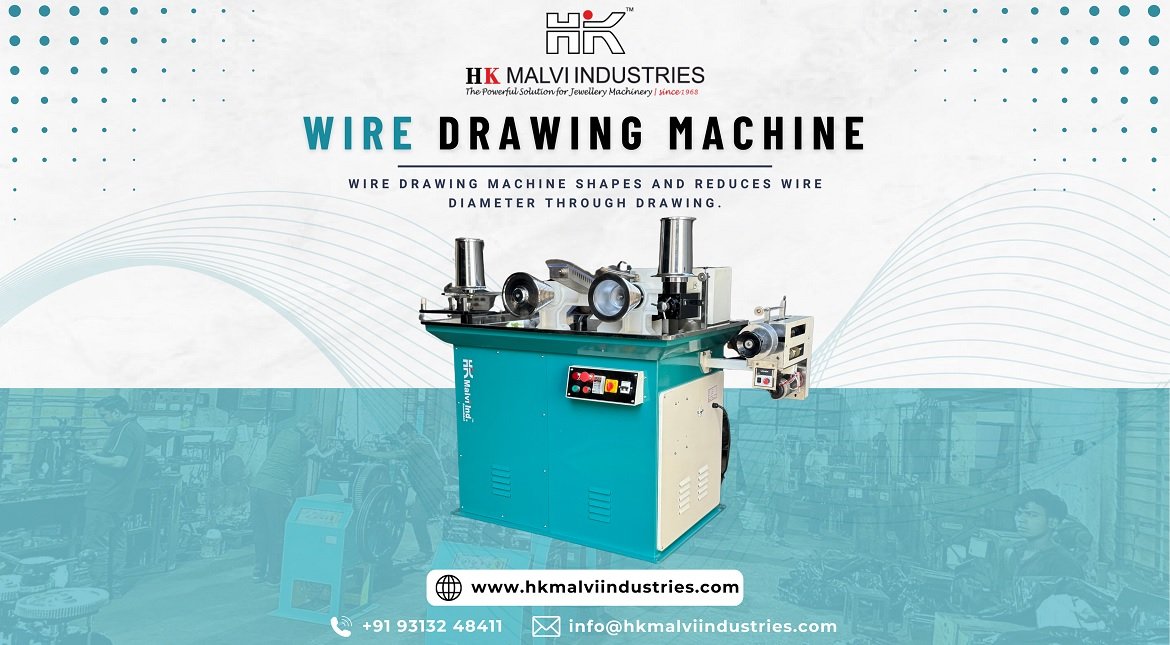
Here’s how a serious wire drawing setup should be evaluated: material range, reduction stages, finish quality, production continuity, and compatibility with upstream and downstream machines. A gold wire drawing machine rarely works alone. In a real unit, it connects with melting, casting, rolling, annealing, and finishing operations. That is why buyers planning a full jewellery line often review not only wire systems but also double head sheet rolling machine options and related reduction machinery.
A good machine should support precise reduction of gold wire with controlled pulling force and repeatable dimensions. This matters for chain makers in Chennai, ring component manufacturers in Bangalore, and casting-based units in Hyderabad where dimensional consistency affects soldering, setting, and finishing time. The same principle applies in Kolkata and Pune, where small deviations can delay batch approvals.
Common questions buyers ask include: What gauge range can be achieved? Can the machine support soft and hard alloy variations? Is it suitable for continuous production? The direct answer is that suitability depends on wire input size, target output, die sequence, and expected throughput. A properly specified machine can handle regular jewellery production efficiently, but under-specification leads to breakdowns and output mismatch.
Many workshops also compare a standalone wire unit against combined systems. In some cases, integrated rolling and drawing planning gives better floor efficiency. For example, those reviewing compact production layouts may also check the active single head wire sheet rolling machine when balancing floor space and batch volume.
Get a Quote for [Gold Wire Drawing Machine]
A mini example from Vadodara explains this well. One mid-sized chain component workshop had repeated wire snapping after rolling. The issue was first blamed on alloy quality. Later, inspection showed uneven feed preparation and poor drawing stage matching. Once the process was corrected with proper reduction planning, wastage dropped and output became more stable. In jewellery production, machine selection and process discipline must go together.
Navigating Quality Standards & Precision Engineering
The best way to judge quality is to look beyond body fabrication. Precision in a wire drawing machine comes from drawing path geometry, die seating accuracy, motor reliability, cooling or lubrication support where required, vibration control, and ease of maintenance. These points sound technical, but they affect everyday business results.
For buyers comparing Jewellery Making Machine Manufacturers, one useful question is: will this machine maintain repeatable output after months of actual use? In India, many units run through mixed production schedules, urgent dispatches, and operator changes. A machine built only for showroom impression may not stay accurate on the shop floor.
Another common question is whether a gold wire drawing machine can be used for other precious metal applications. In many cases, yes, depending on machine configuration and process parameters. Shops handling gold jewellery machinery often also maintain compatible setups for silver or allied applications, provided the machine is specified correctly.
For new investors, especially those planning custom jewellery machinery India requirements or a phased coin minting plant setup India, it is smart to ask for process mapping before purchase. Wire drawing should be aligned with melting, rolling, annealing, and finishing. This becomes even more important in mixed facilities that also use a gold rolling machine, gold casting machine, or other precision jewellery equipment.
If you are researching the wider market before finalizing vendors, this overview on best jewellery making machine in India helps frame the bigger machinery ecosystem.
Local Manufacturers vs H.K Malvi Industries (Comparison Table)
Here’s a practical comparison buyers often make when choosing between local fabricators and an established engineering house.
|
Parameter |
Typical Local Manufacturer |
H.K Malvi Industries |
|---|---|---|
|
Industry legacy |
Often limited or unclear |
Established in 1968 with 56+ years of legacy |
|
Process understanding |
General fabrication focus |
Jewellery and minting machinery application knowledge |
|
Customization |
Basic modifications only |
1000+ custom solutions delivered |
|
Quality approach |
May vary by batch |
ISO 9001:2015 aligned manufacturing processes |
|
Export capability |
Limited |
Trusted exporter to 20+ countries |
|
After-sales support |
Not always structured |
Known for strong after-sales and engineering support |
A frequent buyer query is whether jewellery making machine manufacturers near me are always the better choice. Not necessarily. Nearby access helps, but engineering depth, process fit, and service quality usually matter more than simple distance.
For region-specific comparison, some buyers also review pages like wire drawing machine in Tamil Nadu before making shortlist decisions.
Step-by-Step Process – How We Deliver Gold Wire Drawing Machine
Here’s how H.K Malvi Industries typically supports a serious machinery requirement.
First comes requirement study. This covers metal type, input size, target output, batch volume, operator skill level, and available floor space. A workshop in Indore may need compact production, while a larger unit in Surat may focus on continuous chain wire output.
Second is process matching. This is where buyers get clarity on whether they need only a wire drawing machine or a broader jewellery plant setup with goldsmith machinery, rolling units, and allied systems. This stage often avoids costly mistakes.
Third is machine engineering and build planning. This includes selecting motor capacity, drawing arrangement, structural strength, and maintenance access. Buyers looking for Jewellery Machinery Manufacturers India should pay close attention here, because this is where long-term reliability begins.
Fourth is testing and dispatch readiness. A machine should be reviewed not just for movement, but for stable operation, ease of handling, and expected production suitability.
Fifth is installation guidance and support. This matters because many issues blamed on machine quality actually come from poor line setup, wrong die use, or inconsistent operator method.
If you want to discuss your layout, production target, or replacement requirement, the company also offers Free Machinery Consultation. Many buyers ask for the Download Jewellery Machinery Cost Guide before final budgeting, and some prefer quick coordination on WhatsApp for drawings and space sharing. Direct inquiry can be made through the contact page.
Real Client Case Study
Here’s a realistic case from western India. A mid-sized jewellery manufacturer, referred to here as Client R, was producing lightweight chain components for wholesalers in Mumbai and Delhi. Their old line caused frequent gauge inconsistency, and operators were stopping production several times each shift for adjustment. Scrap recovery was manageable, but productivity was weak.
The first review found three issues: irregular pre-rolling, poor die progression, and machine vibration at higher loads. The client initially assumed they only needed a replacement wire drawing machine. On deeper assessment, the recommendation was to realign the full reduction flow and train operators on better stage control.
After implementation, the unit reported smoother wire finish, fewer interruptions, and better consistency in downstream chain work. The important lesson was simple: buying a machine alone does not solve process weakness unless the full production sequence is considered.
Another short success example came from a startup workshop in Chandigarh. They were planning a modest line for custom jewellery production and had limited floor space. By choosing a process-matched setup instead of oversized equipment, they controlled initial investment and improved usable output from the first quarter.
FAQs
1. What is a gold wire drawing machine used for?
It is used to reduce gold wire diameter through controlled drawing stages for jewellery components such as chains, findings, and fine wire parts.
2. Can one machine handle different gold alloys?
Yes, but machine suitability depends on alloy hardness, input size, die sequence, and required output gauge.
3. How do I choose the right capacity?
Check your daily production target, starting wire size, finish requirement, and whether the machine must run in batch or continuous mode.
4. Is wire drawing used only in large factories?
No. Small and mid-sized workshops also use it, especially when they need consistency and less manual variation.
5. What machines are usually used before wire drawing?
Common upstream equipment includes melting, casting, rolling, and annealing systems.
6. Does after-sales support matter for this machine type?
Yes. Die alignment guidance, spare availability, and process troubleshooting are very important for smooth production.
7. Can this machine be part of a larger minting or jewellery line?
Yes. It can be integrated into broader production planning that may include rolling, casting, and even minting machinery supplier requirements.