Jewellery Rolling Mill Machine for Precision Gold and Silver Work
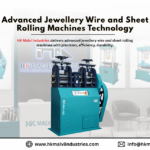
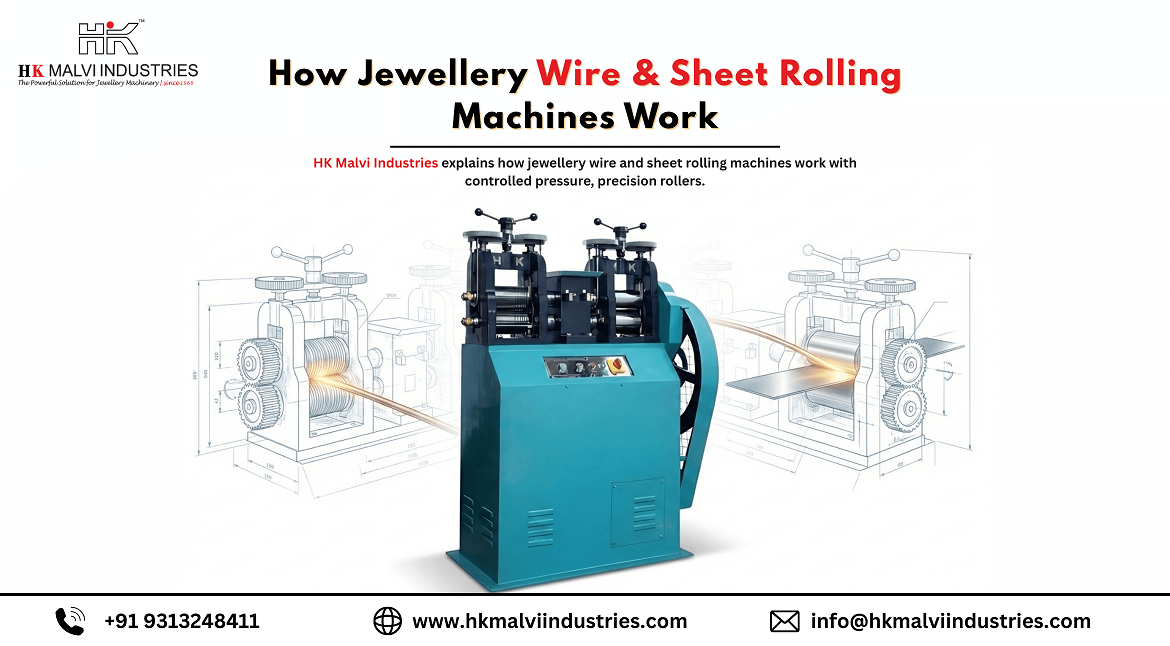
A reliable jewellery rolling mill machine helps you control thickness, improve finish, and reduce metal loss during daily production. For workshops handling bangles, chains, coins, bars, or sheet work, the right mill directly affects consistency, operator ease, and final product quality. If you are comparing options for sheet reduction and precision forming, start with Jewellery Rolling Mill Machine because that is often the practical benchmark for Indian jewellery units.
In this guide, you will learn what matters when selecting a rolling mill, how production quality is judged on the shop floor, what separates standard builds from engineered machines, and how H.K Malvi Industries approaches delivery for Indian and export customers. Whether you operate in Ahmedabad, Mumbai, Surat, Jaipur, Delhi, Hyderabad, or Bangalore, the same buying question comes up: will the machine hold accuracy over years of use, not just during the demo?
Why Choose H.K Malvi Industries for Jewellery Rolling Mill Machine
The best reason to evaluate H.K Malvi Industries is not hype. It is track record. Established in 1968 and founded by Mr. Himmatram K. Malvi, the company now works under the leadership of Mr. Shyam Malvi and brings over 56 years of legacy with 60+ years of hands-on engineering depth behind custom machinery decisions.
Yes, buyers looking for gold jewellery machinery manufacturer in Ahmedabad usually compare price first. But on actual factory floors, the bigger issues are roller hardness, parallel alignment, vibration control, load handling, and support when output starts drifting after months of use. That is where experience shows up. A machine may look similar from outside, yet perform very differently once you start rolling gold, silver, copper alloy, or minting stock in real production conditions.
A small manufacturer in Chennai once told me that their older unit worked fine only when handled by one senior operator. The moment a second shift started, sheet variation increased. That is a common sign that machine geometry and setup stability are not forgiving enough. For growing units, forgiving and repeatable performance matters more than a flashy brochure.
If you are still evaluating the wider ecosystem of goldsmith machinery, this overview of jewellery making machines in India gives helpful context before you finalize a rolling setup. It also helps buyers planning a broader jewellery plant setup rather than a single-machine purchase.
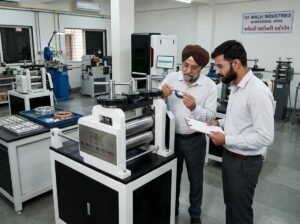
Our Jewellery Rolling Mill Machine Manufacturing Capabilities
Here’s how H.K Malvi Industries supports different use cases for rolling operations. The focus is usually on sheet rolling, thickness reduction, smooth feeding, and long service life. But serious buyers also ask whether the machine fits into a larger line with a wire drawing machine, gold casting machine, hydraulic press, and downstream finishing equipment.
Typical manufacturing capabilities include:
- Sheet rolling for gold, silver, and select non-ferrous jewellery alloys
- Stable roller pressure for controlled thickness reduction
- Frame strength designed for lower vibration during long runs
- Custom sizing based on workshop layout and production scale
- Integration support for coin, bar, or jewellery component work
- Service planning for spare parts and operator guidance
Yes, we provide solutions for customers searching for custom jewellery machinery India when standard machine dimensions do not match their workflow. This is common in Kolkata and Pune, where many established family-run units upgrade in phases rather than replacing the full line at once.
For businesses connected to bullion or medallion work, rolling machines also link closely with coin minting plant operations. A minting customer may need rolling stability before blanking, pressing, or die work becomes consistent. That is why many buyers also review hydraulic press machines for gold silver coins bars during the same purchase cycle.
A quick mini success story: one mid-size unit in Vadodara producing silver gift articles had recurring wastage due to uneven sheet reduction from an old imported machine with difficult spare support. After shifting to a locally serviceable setup and retraining operators on pass planning, they reduced rework time within weeks. The gain did not come from speed alone. It came from predictability.
Right in the middle of your evaluation, it helps to speak to an engineer instead of guessing specs from catalogues.
Get a Quote for [Jewellery Rolling Mill Machine]
Navigating Quality Standards & Precision Engineering
The best way to judge a rolling mill is through measurable output. In jewellery production, precision is not a luxury feature. It affects metal recovery, finishing time, stone setting compatibility, and customer deadlines. H.K Malvi Industries follows ISO 9001:2015 aligned manufacturing processes, which matters because repeatability comes from process discipline, not only machining skill.
You might be wondering what “precision jewellery equipment” really means in daily use. On the shop floor, it usually means:
- Thickness stays close to target across repeated passes
- Rollers maintain alignment under load
- Surface finish does not introduce avoidable finishing work
- Controls and mechanics are easy for trained operators to repeat
- Maintenance intervals are practical for Indian workshop conditions
For buyers comparing jewellery machinery Ahmedabad with suppliers from other regions, local engineering access can be a real operational advantage. A unit in Indore may manage remote support for software, but mechanical misalignment or part wear still needs practical resolution. That is why many businesses prefer suppliers with strong after-sales understanding of Indian usage patterns, dust conditions, voltage behavior, and mixed operator skill levels.
If your production includes dies, medallions, or bars, this related page on dies and moulds for coins bars is useful because rolling quality often affects what happens in later pressing and finishing stages.
Another useful question buyers ask is this: are rolling machines only for large factories? No. Smaller units in Chandigarh or Jaipur often benefit even more because manual correction costs them a bigger share of their daily margin. A good rolling machine protects output discipline.
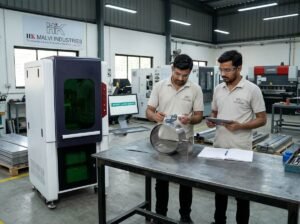
Local Manufacturers vs H.K Malvi Industries
Here’s how H.K Malvi Industries is often compared with general local suppliers when buyers review Jewellery Making Machine Manufacturers for long-term use rather than only immediate purchase price.
|
Comparison Point |
Typical Local Supplier |
H.K Malvi Industries |
|---|---|---|
|
Industry legacy |
Varies, often limited |
Established in 1968 with 56+ years of legacy |
|
Engineering depth |
May focus on standard fabrication |
60+ years of hands-on machinery expertise |
|
Customization |
Often limited to minor changes |
Supports tailored machine builds and process needs |
|
Delivery experience |
Mostly local projects |
1000+ custom jewellery and minting machinery solutions delivered |
|
Export exposure |
Not always available |
Trusted exporter to 20+ countries |
|
After-sales support |
Depends on team size |
Structured support with practical application guidance |
If you want a broader comparison of production solutions available from Jewellery Machinery Manufacturers India, this article on jewellery manufacturing machines in Ahmedabad gives a wider view.
Step-by-Step Process – How We Deliver Jewellery Rolling Mill Machine
Here’s how H.K Malvi Industries usually handles a rolling mill requirement from inquiry to dispatch. This matters because machine success depends as much on requirement matching as on machining itself.
1. Requirement mapping
The first discussion covers metal type, output volume, target thickness, operator skill level, power conditions, and whether the unit will support jewellery sheet, bar, or coin minting plant setup India workflows.
2. Technical recommendation
The team suggests an appropriate build, roller configuration, and working range. If the customer already runs a gold rolling machine or older press line, compatibility is checked before finalization.
3. Production and inspection
Manufacturing follows defined process checks. Buyers usually ask for confidence on material quality, assembly, and finish. Practical inspection matters more than overlong paperwork.
4. Dispatch planning and installation support
For customers in Surat, Mumbai, or Delhi, logistics may be straightforward. For export or remote dispatch, packing and handling become more important. This export-focused page on gold rolling machine supply to Bangladesh gives a useful sense of delivery readiness.
5. Training and after-sales follow-up
Operators are guided on pass planning, load discipline, lubrication, and maintenance basics. That step is often ignored by lower-cost suppliers, but it prevents many output complaints later.
Before you move ahead, ask for a Free Machinery Consultation, request to Download Jewellery Machinery Cost Guide, and connect on WhatsApp for quicker technical discussion. Even experienced buyers save time when specs are clarified early.
Real Client Case Study
Here’s a practical case from western India. A jewellery manufacturer in Surat, anonymized here as Client S, was expanding from handcrafted silver sheet work into higher-volume gold components for regional retailers. Their old rolling arrangement caused uneven thickness, frequent operator correction, and delayed polishing because the surface finish varied from batch to batch.
The solution was not just replacing a machine. The process began with production mapping: input metal form, expected daily output, pass sequence, and maintenance habits. Based on that, a jewellery rolling mill machine was configured for more stable reduction and easier repeat use across shifts.
Within a few months, Client S reported three useful changes:
- Better repeatability in sheet thickness
- Less rework before forming and finishing
- Easier training for newer operators
That may sound simple, but in real factory economics it matters. When a unit can standardize output, planning improves across casting, cutting, finishing, and delivery. For buyers searching online for jewellery making machine manufacturers near me, this is the real benchmark: can the machine reduce dependence on one “expert operator” and make production more system-driven?
FAQs
1. What is a jewellery rolling mill machine used for?
It reduces metal thickness and improves sheet or strip uniformity for jewellery production, coin stock, and related fabrication work.
2. Is it suitable for gold and silver both?
Yes, if the machine is specified correctly for the material, thickness range, and production load.
3. How do I choose the right machine size?
Start with your daily output, metal type, target thickness, and future expansion plan.
4. Can it be integrated with other machinery?
Yes, many units pair it with pressing, casting, die, and wire processing equipment.
5. How important is after-sales support?
Very important. Alignment, maintenance, training, and spare support directly affect long-term output quality.
6. Do small jewellery units need a rolling mill?
Often yes. Smaller units benefit from reduced wastage and more predictable output.
7. How can I contact the company?
Use the contact page, call +91-98250 00000, or email info@hkmalviindustries.com for technical discussion and WhatsApp support.