Gold Jewellery Machine Exporters: What Buyers Should Check Before They Invest
If you are comparing Gold Jewellery Machine Exporters, the real question is not only price. It is whether the machine will hold micron-level accuracy, run daily without frequent stoppage, and match your production style. For a workshop making bangles in Mumbai, a minting unit in Hyderabad, or a chain manufacturer in Surat, the machine setup has to fit the job, metal flow, manpower, and expected output.
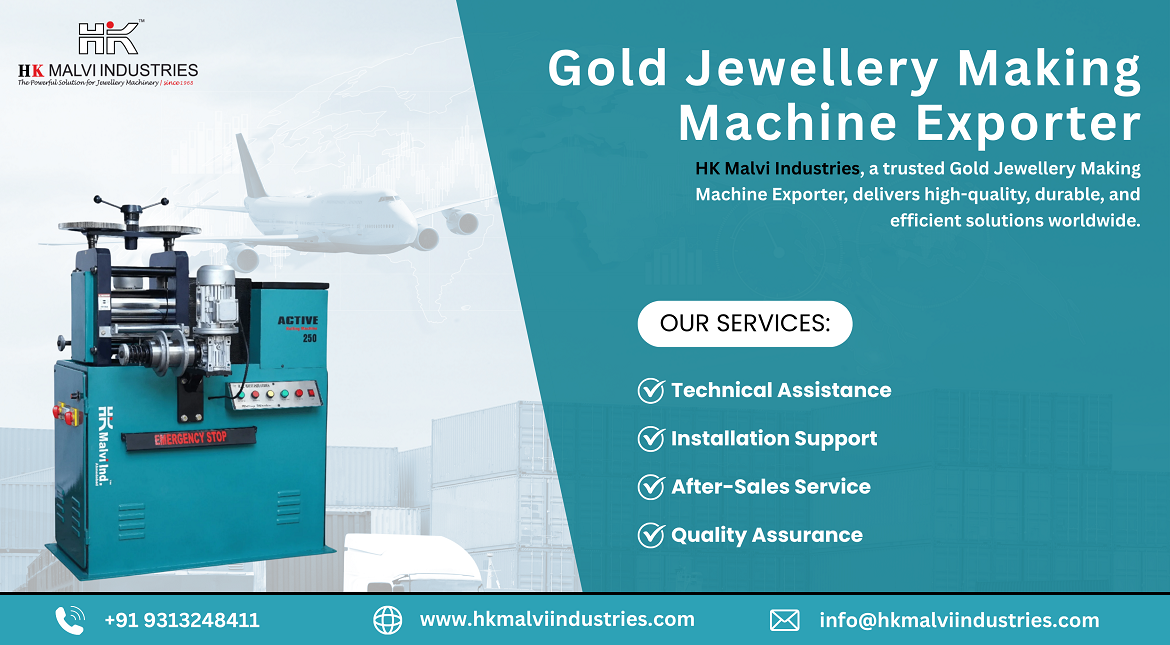
A practical starting point is to study proven rolling and forming systems such as jewellery wire and sheet rolling machines. Buyers usually want three things: reliable finish quality, low wastage, and dependable service support. This guide explains how to assess an exporter, what manufacturing depth matters, how quality checks affect output, and how H.K Malvi Industries approaches supply for Indian and overseas buyers.
Why buyers consider H.K Malvi Industries for Gold Jewellery Machine Exporters
The first reason is experience that can be checked, not just claimed. H.K Malvi Industries was established in 1968 and operates from C/1/507, GIDC Industrial Area, Near New Odhav Water Tank, Odhav, Ahmedabad, Gujarat 382415, India. Founded by Mr. Himmatram K. Malvi and currently led by Mr. Shyam Malvi, the company brings over 56 years of legacy and 60+ years of hands-on engineering exposure to jewellery and minting equipment.
Yes, buyers from Ahmedabad, Jaipur, Delhi, and Kolkata often ask the same thing: what makes one exporter more dependable than another? In practice, it comes down to machine stability, application understanding, and after-sales response. A unit that makes lightweight chains needs different pressure and tolerance logic than a workshop focused on plain gold strips or embossed coins. That is why many buyers searching for gold jewellery machinery manufacturer in Ahmedabad look beyond catalog photos and ask for process fit.
Here’s how H.K Malvi Industries is usually evaluated by serious buyers: precision engineering, customised solutions, energy-efficient designs, durable build quality, and support after dispatch. The company states 1000+ custom jewellery and minting machinery solutions delivered and export trust across 20+ countries. For a buyer in Chennai or Bangalore, that matters because export experience usually means better packing discipline, documentation clarity, and predictable commissioning support.
A simple example from the trade: one small manufacturer in Pune upgraded from an older rolling unit that required repeated manual correction. After switching to a more application-matched setup, the team reported smoother sheet consistency and less rework before forming. Even a small variation in roller alignment can change daily output. If you want background on market expectations, see gold jewellery making machine.

Manufacturing capabilities that matter in gold jewellery machinery exports
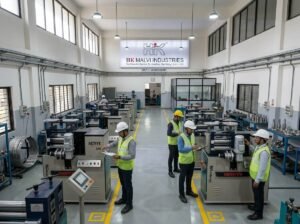
The best exporters do not sell a single machine in isolation. They understand line integration. A jewellery unit may need a gold rolling machine, wire drawing machine, gold casting machine, hydraulic press, and supporting precision jewellery equipment that work together without creating bottlenecks. This is especially true for growing units planning a full jewellery plant setup.
Yes, we provide a practical way to think about capability: look at the range, then look at the application depth. A company handling only one machine category may not guide you properly on process flow. An exporter with exposure to sheet reduction, wire sizing, minting pressure, and die-based operations can usually recommend a more stable configuration. Buyers comparing custom jewellery machinery India options often miss this and end up buying mismatched equipment.
For example, a workshop making coin blanks and bars may need press-force consistency more than cosmetic automation features. In that case, hydraulic press machines for gold silver coins bars becomes relevant because coin minting plant work depends heavily on pressure control, repeatability, and die life. A minting machinery supplier should be able to discuss metal thickness, strike pressure, and batch variation in plain language.
Similarly, if the job involves uniform sheet output for downstream forming, dual-head and precision rolling configurations can improve flow. A useful example is double head sheet rolling machine, which buyers often review when throughput and consistency both matter. In short, capability is not about how many machines are listed on a website. It is about whether the exporter can connect your production goal to the right machine logic.
Mini client success story: a family-run goldsmith machinery unit serving retailers in Vadodara and Indore wanted to reduce scrap on thin-gauge sheet work. After moving to a more suitable rolling arrangement and adjusting process sequencing, they saw more stable output across shifts. It was not a dramatic showroom-style story. It was a practical improvement in control, which is what most real buyers want.
Quality standards, precision checks, and export readiness
Here’s what separates a good-looking machine from a dependable one: dimensional accuracy, material quality, component matching, and testing discipline before dispatch. In jewellery machinery Ahmedabad circles, experienced buyers often ask about spindle stability, load endurance, finish consistency, and calibration routine before they ask about colour or panel design.
H.K Malvi Industries follows ISO 9001:2015 aligned manufacturing processes, and that is relevant because repeatability matters in gold jewellery machinery. If your rollers drift, if pressure varies, or if vibration rises under load, the problem shows up in your product long before it shows up in the machine brochure. A buyer in Surat making lightweight pieces will notice that immediately. A buyer in Chandigarh doing lower-volume custom work may notice it after a few batches. Either way, precision affects margins.
Here’s how buyers should evaluate an exporter before purchase:
- Ask what testing is done before dispatch.
- Ask how tolerances are checked on rolling and forming sections.
- Ask whether application-specific customisation is possible.
- Ask what support is available for installation and early operation.
- Ask how export packing, electrical compatibility, and documentation are handled.
If you are narrowing vendors, use one clear filter: can they explain your process back to you correctly? A serious exporter should understand whether you are making wire, sheet, cast items, blanks, or a mixed line. That is one reason buyers searching for jewellery making machine manufacturers near me often still prefer experienced exporters from Ahmedabad when technical guidance is stronger. For regional context, see gold jewellery making machine in Ahmedabad.
In short, export readiness is not only shipping. It includes machine suitability, documentation, safer packing, and support after delivery.
Local manufacturers vs exporter-led supply: a practical comparison
The best option depends on your requirement. A nearby fabricator may help with urgent low-cost fabrication, but exporter-led manufacturers usually offer better process knowledge, documentation, and long-term consistency for production-grade applications.
|
Factor |
Local Fabricator |
Exporter-Led Manufacturer |
|---|---|---|
|
Application understanding |
May be limited to basic fabrication |
Usually stronger in jewellery and minting workflows |
|
Customisation depth |
Basic modifications |
Better fit for process-specific requirements |
|
Testing and QC |
Can vary widely |
More structured pre-dispatch checks |
|
Export documentation |
Often limited |
Usually organised for overseas buyers |
|
After-sales support |
Depends on individual vendor |
Typically more process-oriented support |
If you are planning a new line or an upgrade, this is the practical midpoint to act:
Get a Quote for Gold Jewellery Machine Exporters]
For buyers comparing local and Gujarat-based suppliers, trusted jewellery making machine in Gujarat gives useful context on why process consistency and service depth matter more than short-term price gaps.
How delivery works and a real client case study
Here’s how H.K Malvi Industries typically supports a machine supply project for domestic and export buyers:
- Requirement discussion: product type, output target, metal profile, and workshop layout.
- Machine recommendation: suitable setup for rolling, drawing, casting, pressing, or mixed flow.
- Technical confirmation: power, capacity, dimensions, and custom changes if needed.
- Manufacturing and testing: pre-dispatch inspection and performance checks.
- Dispatch and support: packing, shipping coordination, and installation guidance.
- Post-supply assistance: operating support, maintenance guidance, and future upgrade discussion.
In practice, this step-by-step approach reduces mismatch. A buyer from Jaipur may focus on artisan finish and flexibility. A buyer in Hyderabad starting a coin minting plant setup India project may need pressure and die alignment support more than speed.
Case study: sheet and minting upgrade for a western India manufacturer
A mid-sized client, “R.K. Metals” from western India, was supplying gold components to wholesalers in Ahmedabad, Surat, and Mumbai. Their issue was familiar: uneven sheet thickness in one stage and slow blanking support in another. The older equipment still ran, but output quality varied by operator and shift.
The solution was not a full factory replacement. First, the production flow was studied. Then the bottleneck stages were identified. The client upgraded the rolling section and added a more suitable press-oriented setup for coin and bar-related work. The focus stayed on precision, not unnecessary complexity.
Within the next operating cycle, the client reported smoother sheet uniformity, fewer manual corrections, and better timing between departments. Rework reduced, and the supervisors spent less time resolving avoidable variation. That is usually what a well-planned machine investment should do: improve control, not just add equipment.
If you want to discuss a similar requirement, use the contact page for a Free Machinery Consultation. You can also ask for the Download Jewellery Machinery Cost Guide or connect on WhatsApp for faster technical discussion.
FAQs
1. What should I check before choosing gold jewellery machine exporters?
Check application fit, machine build quality, testing process, export documentation, and after-sales support.
2. Do exporters also help with custom machine requirements?
Yes, many experienced suppliers handle process-based customisation for sheet, wire, casting, and minting work.
3. Is Ahmedabad a strong location for jewellery machinery sourcing?
Yes. Ahmedabad has a strong engineering base and is widely considered practical for jewellery machinery and minting equipment manufacturing.
4. Can one supplier handle both jewellery and minting equipment?
Yes, if the manufacturer has experience in gold jewellery machinery as well as hydraulic press and related minting systems.
5. How do I know if a machine is suitable for my workshop size?
Share your daily output, metal type, product mix, and available floor space. A good supplier will recommend accordingly.
6. Is local purchase always better than buying from an exporter?
Not always. For basic urgent needs, local purchase may work. For process-driven production, exporter-led manufacturers often offer better technical guidance.
7. What support should I expect after delivery?
You should expect installation guidance, operating support, maintenance advice, and help with future upgrades or spare planning.