How Does Permanent Marking Reduce Manufacturing Errors?
Permanent marking creates clear, durable identification on every component, reducing mix-ups, rework, and inspection mistakes throughout production. HK Malvi Industries offers advanced marking solutions that help manufacturers maintain consistent quality and complete traceability. How Dot Pin Marking Machine Supports Quality Control becomes evident through accurate serial numbers, batch codes, and product identification, enabling faster verification, improved compliance, and reliable manufacturing processes across industrial applications.
How Dot Pin Marking Machine Supports Quality Control
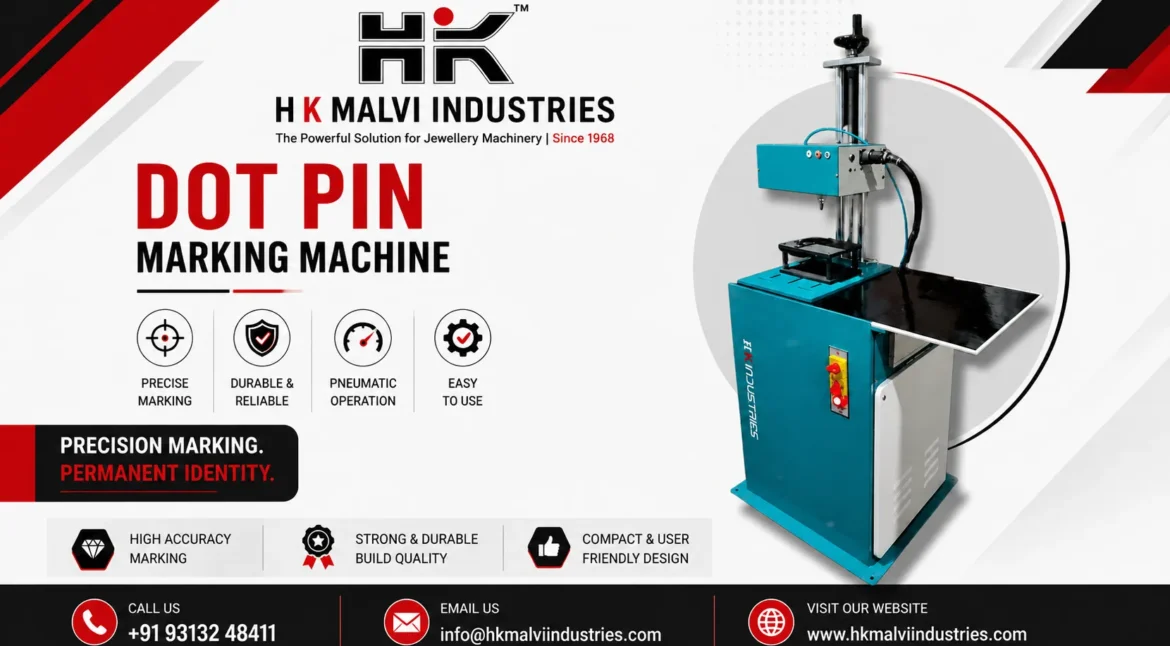
In any manufacturing setup — whether it’s automotive parts, jewellery components, or precision metal fittings — traceability is not optional anymore. Every part that leaves the factory needs a mark that tells its story: batch number, date, serial ID, or QC status. This is exactly where a dot pin marking machine earns its place on the shop floor. It doesn’t just stamp a code onto metal; it becomes the backbone of a company’s quality control system, giving every component a permanent, tamper-proof identity that can be traced back through the entire production line.
Why Traceability Starts With Marking
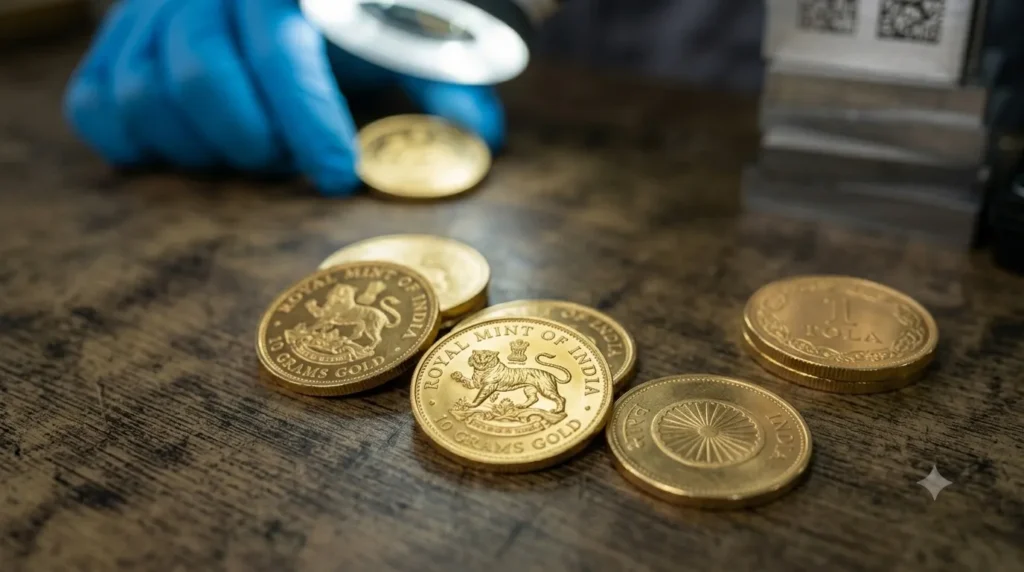
Quality control isn’t just about inspecting a part once and moving on. It’s about answering, months later: which machine made this, on which shift, using which raw material batch? A dot pin marking machine gives manufacturers that answer instantly. Unlike ink stamps or labels that fade, peel, or smudge under oil and heat, dot peen marking creates a permanent indentation on the metal surface. This becomes critical when a defective batch needs recalling, or when a customer disputes a part’s origin. The mark simply cannot be argued with.
This same discipline matters across other processes too. When manufacturers work with sheet metal parts, clean and repeatable cuts matter before marking even begins. Many factories pair their marking stations with high speed die cutting systems. Consistent blank quality directly affects how cleanly a dot pin marker can engrave without distortion. Where thicker gauge material or multi-step forming is involved, a hydraulic stamping & cutting press multipurpose setup often works alongside marking on the same line. This way, parts move from cutting to stamping to permanent identification without leaving a controlled, trackable path.
How the Marking Process Actually Improves QC Outcomes
A dot pin marking machine drives a hardened stylus rapidly against the metal surface, creating tiny dots that form numbers, letters, logos, or QR/DataMatrix codes. At H.K Malvi Industries, this process is fully computer-controlled, so every mark comes out identical in depth and placement. This removes the human error common with manual stamping. For quality teams, that consistency means more reliable audit trails. When a batch fails inspection, the marking shows exactly where to look — which is why recalls stay contained rather than spreading.
Marking is rarely a standalone decision; it usually sits at the end of a forming and shaping chain. Factories producing rolled components often ask how does a double head sheet rolling machine work before deciding where to add marking, since rolled parts need a flat, stable zone for the pin to strike accurately. Coin-like or medallion components need marking close to forming too, which is why how hydraulic minting machines improve productivity often comes up alongside marking and traceability needs.
Navigating Quality Standards & Precision Engineering
Dot pin marking isn’t limited to heavy engineering. It has quietly become essential wherever component origin matters — automotive fasteners, electrical enclosures, precision tools, and increasingly, fine manufacturing sectors like jewellery, where hallmarking and batch identification are now standard practice. This shift is part of a broader trend explained in why jewellery factories need modern equipment, where marking, cutting, and pressing are expected to work together rather than as separate machines. This kind of integration also supports recognized quality benchmarks like ISO 9001, since traceability at every step is what a real quality system depends on. When cutting, forming, and marking sit under one quality umbrella, defect rates typically drop, because nothing slips through untracked.
What to Look for in a Dot Pin Marking Setup
Not every marking machine performs the same on every material. Manufacturers should check marking depth control (especially for hardened or coated metals), cycle speed if the line runs high volume, and compatibility with variable data — since static logos are one thing, but sequential batch numbers or QR codes require a machine that can pull data from a database in real time. Machine rigidity also matters more than people expect; a loose frame causes inconsistent dot depth, which undermines the very traceability the machine is meant to provide.
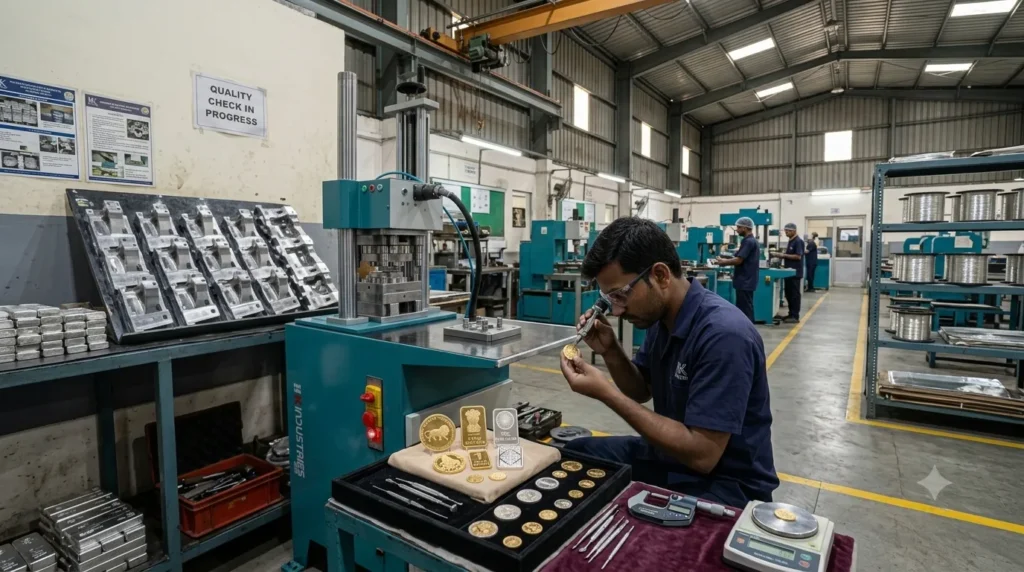
Buyers evaluating dot pin marking equipment should also think about how it fits into their existing line — whether it needs to sit after a cutting press, a rolling station, or a forming press — because retrofitting marking as an afterthought usually costs more than planning it in from the start.
Local Manufacturers vs H.K Malvi Industries
| Factor | Typical Local Manufacturer | H.K Malvi Industries |
|---|---|---|
| Years in Operation | Varies, often under 15 years | 56+ years since 1968 |
| Custom Engineering | Limited, mostly fixed models | Fully customised marking parameters per client requirement |
| Export Experience | Rarely export-ready | Exported to 20+ countries |
| After-Sales Support | Inconsistent | Dedicated support team |
| Machines Delivered | Not publicly documented | 1000+ documented installations |
Step-by-Step Process – How We Deliver Dot Pin Marking Machinery
Here’s how H.K Malvi Industries typically works with a new client. First, we understand the marking requirement — material type, hardness, mark size, and whether the data is static (logos, fixed codes) or variable (batch numbers, QR/DataMatrix, serial IDs). Second, our engineering team recommends whether a standalone marking station or an in-line unit integrated with your cutting or stamping press makes more sense for your production volume.
Third, we build and bench-test the machine at our Ahmedabad facility before dispatch, running sample parts to confirm mark depth and legibility. Fourth, installation and operator training happen on-site, whether the client is in Mumbai, Chennai, Pune, or Surat.
Finally, we stay in touch for servicing, because a marking machine that drifts out of calibration produces inconsistent depth, which defeats the entire purpose of traceability. Clients upgrading their upstream cutting stage often ask us about high speed die cutting at this point in the conversation, since clean, consistent blanks make a real difference in how sharply the pin marks the final part.
Real Client Case Study
One illustrative example: a mid-sized auto components unit near Ahmedabad was struggling with faded label-based batch tracking — nearly 6% of parts had illegible or missing codes by the time they reached final QC, making recalls slow and imprecise. After switching to one of our dot pin marking machines integrated directly after their stamping press, illegible-code incidents dropped to near zero within a few weeks, and their QC audit time for batch traceability was cut significantly. This kind of outcome isn’t unusual once permanent marking replaces labels as the traceability method. If you’re evaluating a similar setup, our page on why jewellery factories need modern equipment walks through similar integration decisions in more detail.
Frequently Asked Questions
1. What does a Dot Pin Marking Machine actually do?
- It uses a hardened stylus to create permanent indented dots on metal surfaces, forming serial numbers, logos, QR codes, barcodes, or identification marks. These permanent markings improve product traceability, quality control, and industrial identification.
2. Dot Pin Marking Machine alag-alag materials par kaam karti hai?
- Haan. Modern Dot Pin Marking Machines adjustable stylus pressure aur marking speed ke saath aati hain. Isliye yeh steel, stainless steel, aluminium, brass aur coated metals par bhi clear aur permanent marking karti hain, bina material ki quality ya surface ko damage kiye.
3. How does permanent marking affect quality control efficiency?
- Permanent marking creates clear and durable identification on every component. It helps manufacturers quickly trace defective batches, simplify inspections, reduce recalls, and maintain accurate production records, resulting in faster quality checks and improved manufacturing efficiency.
4. Dot Pin Marking laser marking se better kyun hai kuch cases mein?
- Dot Pin Marking oily, rough aur dusty metal surfaces par bhi clear aur readable marks banati hai. Yeh heat, vibration aur harsh industrial environments mein bhi reliable performance deti hai, isliye kai manufacturing applications mein laser marking se better choice ban jaati hai.
5. Does HK Malvi Industries provide installation support?
- Yes. HK Malvi Industries provides complete installation, machine setup, operator training, and dedicated after-sales support with every Dot Pin Marking Machine to ensure smooth operation and maximum productivity.
6. Custom Dot Pin Marking Machine ka lead time kitna hota hai?
- Lead time machine configuration, customization aur production line integration requirements par depend karta hai. HK Malvi Industries consultation ke dauran estimated delivery schedule aur complete project timeline clearly share karta hai.