Automatic Gold Jewellery Making Machines: What Indian Manufacturers Should Check Before Investing
For any jewellery unit, the real value of automation is not speed alone. It is consistency, metal control, less rework, and smoother output from one batch to the next. That is why many workshops moving from manual to semi-automatic production first study the line of gold rolling machine solutions before expanding into a full automatic setup. In practical shop-floor terms, Automatic Gold Jewellery Making Machines help reduce dependency on operator guesswork, improve finish quality, and support predictable production whether you are supplying retailers in Mumbai, Surat, Jaipur, or export buyers who expect repeatable dimensions every time.
Why Choose H.K Malvi Industries for Automatic Gold Jewellery Making Machines
The first thing serious buyers check is not brochure language. They check engineering depth, machine stability, service response, and whether the supplier understands actual goldsmith production. H.K Malvi Industries brings that kind of practical credibility. Established in 1968, founded by Mr. Himmatram K. Malvi, and now led by Mr. Shyam Malvi, the company carries over 56 years of legacy and 60+ years of hands-on engineering knowledge in jewellery and minting machinery.
Yes, this matters on the ground. A workshop in Ahmedabad may need compact, energy-efficient machinery because floor space is limited. A larger unit in Bangalore may ask for continuous-duty operation with tighter tolerance control. A bullion-linked setup in Hyderabad may also want compatibility with downstream coin pressing. These are not generic requirements, and that is where an experienced maker stands apart from ordinary Jewellery Making Machine Manufacturers.
The company has delivered 1000+ custom jewellery and minting machinery solutions and exports to 20+ countries. That combination usually signals something important: the machines are not designed only for display; they are built for ongoing industrial use. Buyers searching for gold jewellery machinery manufacturer in Ahmedabad usually want three things together—precision, durability, and dependable post-installation support. That expectation is reasonable.
A small example from the market: one workshop owner from Pune once shifted from an older local rolling setup to a more stable automatic line because sheet thickness variation was causing loss during downstream forming. The gain was not dramatic in one day, but within a few months the rejection rate dropped enough to justify the move. In jewellery manufacturing, many buying decisions work exactly like this—small precision gains create large annual savings.
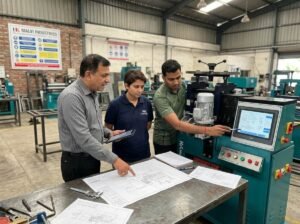
Our Automatic Gold Jewellery Making Machines Manufacturing Capabilities
Here’s how H.K Malvi Industries approaches manufacturing capability: the focus stays on process flow, not on one standalone machine. A jewellery unit rarely buys one system in isolation. It normally builds around rolling, drawing, pressing, forming, and casting needs depending on product range.
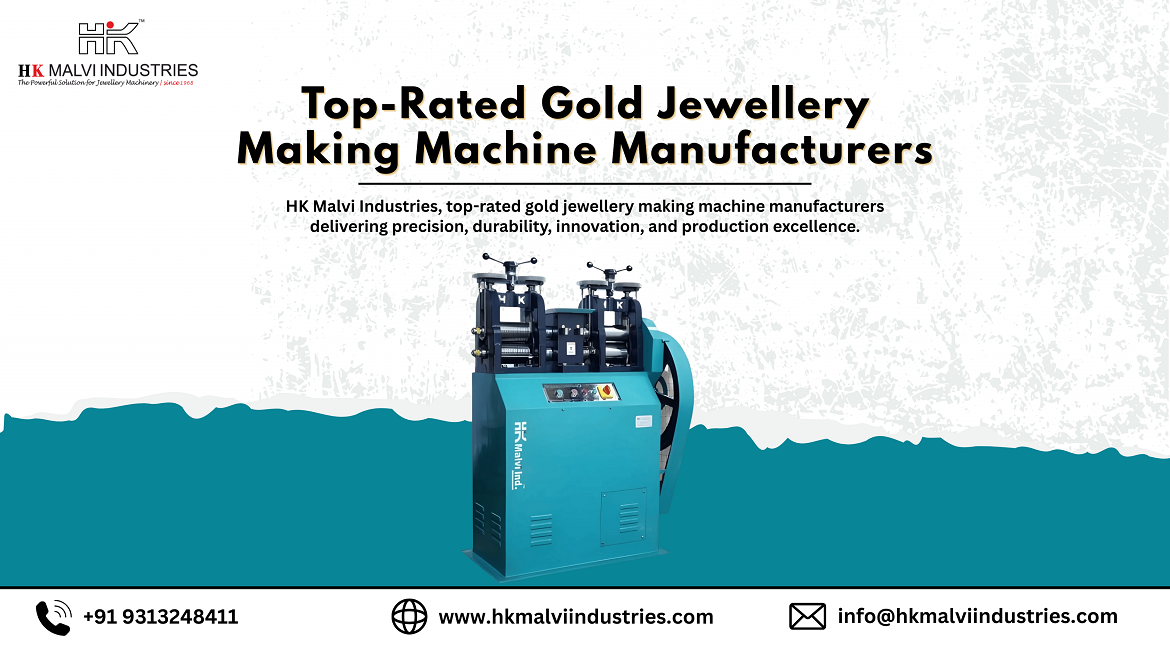
That is why buyers often review integrated options such as double head sheet rolling machine configurations when planning higher throughput. For chain components, strips, blanks, and fine sections, sheet control is critical. For bangle, ring, and lightweight ornament production, even minor variation in thickness can create wastage further ahead.
Yes, modern automatic lines can be aligned with gold jewellery machinery, goldsmith machinery, wire drawing machine systems, and gold casting machine workflows. If a manufacturer is planning a broader jewellery plant setup, it also helps to study coin minting plant equipment and pressing systems, especially where bars, medallions, or token work runs alongside ornament production.
In Chennai, Delhi, and Kolkata, I have seen a common pattern: businesses first buy machinery for one product line, then within a year they want modular expansion. That is why custom jewellery machinery India is such a strong buying phrase today. Standard machines are useful, but custom layout planning often saves more money over time by reducing handling steps and power waste.
Mini client success story: a family-run unit in Vadodara making lightweight daily-wear pieces upgraded from manual passes to an automatic rolling and finishing sequence. Their owner’s comment was simple: “Earlier, the machine depended on the operator. Now the operator depends on the machine settings.” That one sentence explains why automation is gaining traction among practical manufacturers.
Get a Quote for Automatic Gold Jewellery Making Machines
Navigating Quality Standards & Precision Engineering
The best way to judge machine quality is to see how it performs after repeated production cycles, not just during a demo. Precision jewellery equipment should maintain alignment, pressure stability, and controlled output without frequent correction. That is where ISO 9001:2015 aligned manufacturing processes become relevant. They do not replace engineering skill, but they help standardize build quality and inspection discipline.
For buyers comparing options, a useful starting point is to review practical resources like automatic gold jewellery making machines in relation to actual applications. Can the machine support fine gauges? How much setup time is needed? Is lubrication access easy? Are wear parts simple to replace? These are better questions than asking only for motor rating.
Here’s a direct answer many buyers ask: do automatic machines reduce gold loss? In many cases, yes, indirectly. Better control of thickness, pressure, and repeatability often means fewer rejected pieces and less corrective reprocessing. Another common question is whether such systems suit startups. Yes, if the production mix is clear and the machine selection is right-sized. A startup in Indore does not need an oversized line if daily capacity is still moderate.
A practical note for those searching jewellery making machine manufacturers near me: local availability is useful, but local alone should not decide your purchase. In machinery, weak after-sales support, unstable calibration, and inconsistent build quality become more costly than transport distance. This is why many buyers from Mumbai, Chandigarh, and Jaipur still source from jewellery machinery Ahmedabad suppliers when engineering confidence is stronger there.
If you are still at the evaluation stage, a Free Machinery Consultation and a Download Jewellery Machinery Cost Guide can help compare layout needs, utility load, capacity planning, and operator training requirements before the final purchase.

Local Manufacturers vs H.K Malvi Industries
Here’s how buyers usually compare suppliers when shortlisting automatic systems.
|
Comparison Point |
Many Local Suppliers |
**H.K Malvi Industries** |
|---|---|---|
|
Legacy and experience |
Often limited or product-specific |
Established 1968 with long engineering continuity |
|
Customization depth |
Basic standard models |
Supports tailored jewellery and minting solutions |
|
Product ecosystem |
Limited machine categories |
Rolling, drawing, pressing, minting, and related systems |
|
Export readiness |
Not always proven |
Trusted exporter to 20+ countries |
|
Process orientation |
Machine-first sales approach |
Production-flow and application-based guidance |
|
After-sales expectations |
Varies widely |
Known for structured support and practical response |
For broader comparison research, buyers also review pages on gold jewellery machine in Ahmedabad and study whether the supplier understands regional manufacturing realities such as labour skill differences, utility fluctuations, and product mix diversity.
Step-by-Step Process – How We Deliver Automatic Gold Jewellery Making Machines
Here’s how H.K Malvi Industries typically supports a serious machinery inquiry.
First, the production requirement is mapped. That includes product type, alloy use, gauge range, expected output, and operator skill level. Second, the machine configuration is matched with the workflow—rolling, wire drawing, forming, or related support systems. Third, layout planning is considered so that material movement is practical, not cramped.
The next step is build and inspection. At this stage, factors like machine rigidity, drive quality, ease of maintenance, and control stability matter more than cosmetic finish. Then comes dispatch, installation guidance, and operational handover. In many Indian units, training is as important as machinery because a capable machine still underperforms if operators use trial-and-error settings.
Another question buyers ask is whether automatic systems fit mixed production units. Yes, often they do, provided the machine is specified with real application data. A unit supplying bridal jewellery in Surat may need a different setup from a chain-making unit in Bangalore or a medallion producer seeking coin minting plant setup India support.
For businesses that want more background before they speak with sales, the page on trusted jewellery making machine in Gujarat gives useful context around supplier credibility and machine planning.
Real Client Case Study
Here’s a realistic case from western India. An anonymized client, “M.R. Jewels,” based near Surat, was producing lightweight gold components for regional wholesalers across Mumbai and Ahmedabad. Their challenge was uneven sheet tolerance and too much operator dependency during peak wedding-season runs.
The solution was not merely replacing one old machine. The client reviewed the full production flow with H.K Malvi Industries and chose an automatic setup aligned to their sheet preparation and forming requirements. Within months, three visible improvements were reported: more uniform output, lower stoppage during changeovers, and less material wasted in correction work. The owner also found training easier because machine settings became more standardized across shifts.
This is where experience from Jewellery Machinery Manufacturers India becomes useful in a practical sense. A machine should not just run; it should fit the way Indian workshops actually work—with shifting demand, festival peaks, mixed product lines, and operators of varying experience.

FAQs
1. What is an automatic gold jewellery making machine used for?
It is used to improve consistency, reduce manual dependency, and support faster, more accurate jewellery production across rolling, drawing, forming, and related processes.
2. Is an automatic machine suitable for small jewellery businesses?
Yes, if the selected model matches the daily production target, product type, and available workspace.
3. How do I choose between manual, semi-automatic, and automatic machinery?
Choose based on output volume, precision needs, operator skill, and expected business growth over the next few years.
4. Can these machines support both jewellery and coin-related work?
Some setups can, especially when combined with suitable pressing and minting machinery supplier support.
5. Why do many buyers prefer jewellery machinery Ahmedabad suppliers?
Because Ahmedabad has a strong manufacturing base, engineering support ecosystem, and long experience in industrial machine building.
6. Do automatic machines help reduce gold wastage?
In many applications, yes. Better control and repeatability can reduce rework and rejected pieces.
7. What should I ask before buying from a supplier?
Ask about machine application fit, output tolerance, customization options, installation support, wear parts, and operator training.
For a practical discussion, businesses can request a Free Machinery Consultation, ask for the Download Jewellery Machinery Cost Guide, or connect on WhatsApp. You can also reach the team at +91-98250 00000 or info@hkmalviindustries.com, or visit C/1/507, GIDC Industrial Area, Near New Odhav Water Tank, Odhav, Ahmedabad, Gujarat 382415, India.