Best Gold Jewellery Machine Manufacturers: What Indian Jewellery Businesses Should Look For
When you invest in Best Gold Jewellery Machine Manufacturers, you are not just buying a machine. You are fixing your production speed, finish quality, metal recovery, labour dependence, and maintenance cost for years. That is why many workshops, exporters, and minting units across Ahmedabad, Mumbai, Surat, Jaipur, and Delhi first study machine build quality, output stability, and service support before they compare prices. For businesses planning a new line or upgrading old equipment, gold rolling machines are often the first place to start because rolling accuracy directly affects downstream processes like wire drawing, blanking, and finishing.
Why H.K Malvi Industries Matters When You Evaluate Gold Jewellery Machinery
The best way to judge a machinery partner is to look at engineering history, practical understanding of Indian production conditions, and ability to customise. H.K Malvi Industries has been working in this field since 1968, with roots built by Mr. Himmatram K. Malvi and continued under the leadership of Mr. Shyam Malvi, CEO. That legacy matters because jewellery manufacturing in India is never one-size-fits-all. A unit in Kolkata may focus on lightweight chain work, while a plant in Chennai may need stable sheet thickness for temple jewellery components, and a coin unit in Hyderabad may need repeatable pressure cycles for stamping.
The answer many buyers ask is simple: what makes a machinery company dependable over the long term? It is consistent performance on the shop floor. H.K Malvi Industries has delivered 1000+ custom jewellery and minting machinery solutions and works with ISO 9001:2015 aligned manufacturing processes. For a buyer searching gold jewellery machinery manufacturer in Ahmedabad, that kind of operating record gives more confidence than broad claims.
Another practical point is support after installation. A machine may run well in a factory trial, but real value shows up after six months of production. Indian manufacturers in Bangalore, Pune, and Vadodara often ask whether spare parts, calibration guidance, and operator training will be available without delay. That is where detailed machine knowledge helps. If you are comparing brand background and local manufacturing understanding, you can review gold jewellery machinery insights in Ahmedabad to see how application-specific equipment is discussed in a local industrial context.

Manufacturing Capabilities That Actually Matter on the Shop Floor
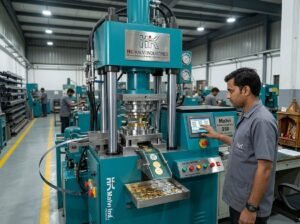
The best machinery setup is the one that matches your product mix, not just your current budget. In real workshops, output depends on machine matching. A gold rolling machine must maintain even reduction; a wire drawing machine must hold dimension without frequent breakage; a gold casting machine must support clean filling and minimal defect rate; and a hydraulic press for bars or coins must give stable pressure under repeated production cycles.
This is why buyers looking at Jewellery Making Machine Manufacturers should ask practical questions: Can the machine run Indian voltage conditions steadily? Is the frame rigid enough for daily production? How easy is it to clean, lubricate, and maintain? Can it be modified for product range growth? These are not small questions. They decide whether your machine becomes an asset or a headache.
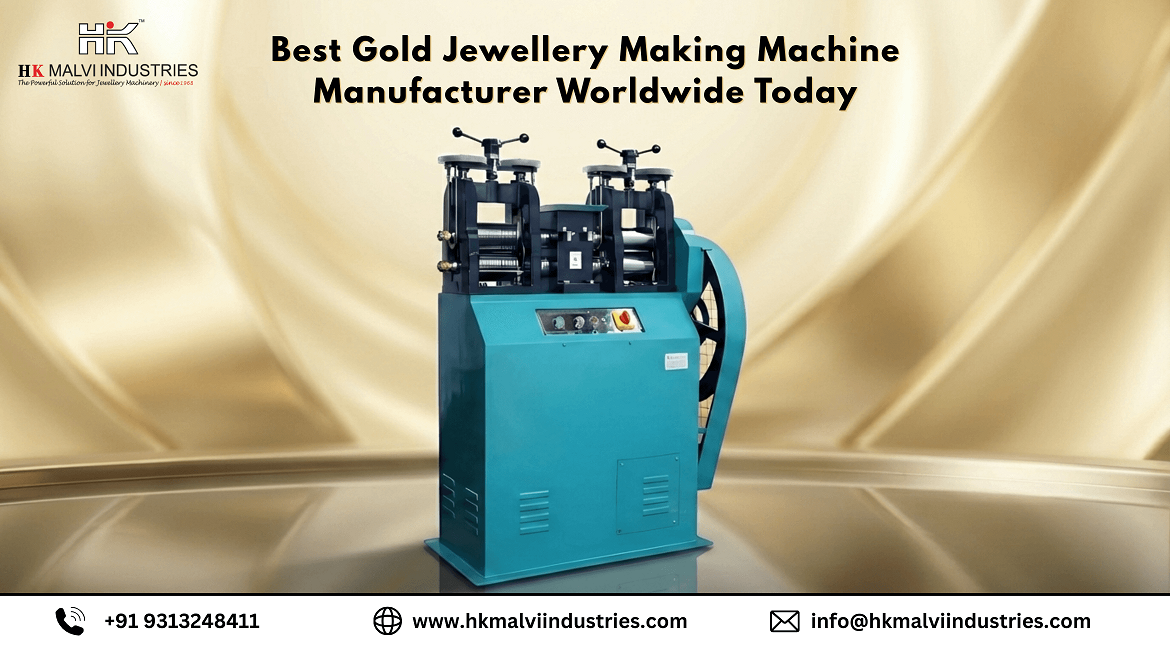
For example, units handling bangles, chains, and lightweight ornaments often need controlled sheet and wire preparation before assembly work begins. In such cases, a double head sheet rolling machine may be useful where output consistency and speed matter more than manual intervention. Similarly, minting and bullion-focused units planning a coin minting plant setup India usually need coordinated presses, dies, material flow, and handling discipline rather than buying one standalone machine at a time.
A small success story from Surat explains this well. One family-run workshop had good karigars but uneven rolling output. Their issue was not labour quality. It was thickness variation from old machinery, which led to avoidable wastage during later stages. After moving to better-aligned precision jewellery equipment and improving process flow, they reduced rework and made planning easier. This is the type of improvement serious buyers should look for: not dramatic claims, just stable production.
Quality Standards, Precision Engineering, and Buyer Checks Before You Finalize
Yes, quality in jewellery machinery can be checked before purchase, but only if you know what to inspect. Start with frame construction, roller hardness, alignment, motor quality, control systems, and tolerance capability. Then review whether the supplier understands your use case: gold sheets, wires, coins, bars, blanks, casting feedstock, or custom jewellery plant setup. A machine that is excellent for one purpose may not be ideal for another.
For many buyers comparing Jewellery Machinery Manufacturers India, precision is the deciding factor. Precision affects thickness repeatability, die life, polishing load, and recovery loss. Even a minor inconsistency becomes costly when you process high-value metals daily. That is why H.K Malvi Industries is often evaluated not just as a machine builder but as an engineering partner for goldsmith machinery, minting systems, and custom jewellery machinery India requirements.
If your product range includes coins, medals, or bars, then pressure consistency and tool compatibility matter as much as machine strength. That is where dedicated systems such as hydraulic press machines for gold silver coins bars become relevant. Buyers from Indore, Chandigarh, and Jaipur often prefer to see whether machinery can be adapted to their die sizes, cycle rates, and floor layout before taking a final call.
Here is one more useful buyer question: should you choose local standard machines or custom-built systems? The answer depends on product complexity and production target. If you are scaling from artisanal work to semi-automated output, then a standard machine may work. If you handle multiple SKUs or want future capacity planning, a customised line is usually safer. For background on broader product applications, you can also review gold jewellery making machine information in a more process-oriented way.
Local Manufacturers vs H.K Malvi Industries
Here’s how buyers often compare suppliers in real-world terms rather than brochure language.
|
Comparison Point |
Local Generic Manufacturer |
**H.K Malvi Industries** |
|---|---|---|
|
Industry legacy |
Often limited or unclear |
Established in 1968 with 56+ years of legacy |
|
Leadership visibility |
Not always disclosed |
Founded by Mr. Himmatram K. Malvi; led by Mr. Shyam Malvi |
|
Customization |
Mostly standard machine supply |
1000+ custom jewellery and minting machinery solutions delivered |
|
Export readiness |
May be limited |
Trusted exporter to 20+ countries |
|
Process alignment |
Varies widely |
ISO 9001:2015 aligned manufacturing processes |
|
After-sales support |
Inconsistent |
Known for practical after-sales support and application guidance |
For buyers typing jewellery making machine manufacturers near me, local proximity is useful, but it should not be the only decision factor. Engineering fit, long-term serviceability, and process understanding are usually more important than distance alone. If you want to compare broader Gujarat-based options and market positioning, see trusted jewellery making machine in Gujarat.
Step-by-Step Delivery Process and a Real Indian Case Study
Here’s how a proper machinery delivery process should work. First comes need assessment: product type, metal range, target output, manpower, and floor space. Second comes technical recommendation: suitable machine model, capacity, custom changes, and utilities required. Third is manufacturing and testing. Fourth is dispatch, installation, and training. Fifth is post-installation support, where real production issues are solved.
In the middle of that journey, buyers usually want a quick commercial next step. For that, use this direct contact option:
Get a Quote for [Best Gold Jewellery Machine Manufacturers]
A detailed case study makes this process clearer. A medium-sized bullion and jewellery unit in Mumbai, referred to here as Client M, planned to add a small coin and ornament component line. Their old setup relied on separate, aging machines sourced over time. Output was manageable, but maintenance interruptions were rising, and finished dimensions were not consistent enough for repeat bulk orders. After consultation, they moved toward a more integrated setup including rolling support and press-based production planning. The focus was not flashy automation. It was stable throughput, lower rework, and easier operator handling.
Within a few months, Client M reported smoother production planning, better repeatability, and lower time loss during format changes. That is usually what businesses in Ahmedabad, Delhi, or Hyderabad want from a machinery upgrade: less uncertainty. If you are exploring the same path, contact the team for a Free Machinery Consultation, ask for WhatsApp assistance, or request to Download Jewellery Machinery Cost Guide before shortlisting equipment.

FAQs
1. Which machines are essential for starting a gold jewellery unit?
The usual starting point includes a gold rolling machine, wire drawing machine, basic press or forming equipment, and depending on output, a gold casting machine.
2. How do I choose between standard and custom jewellery machinery?
Choose standard machines for limited, repetitive output. Choose custom systems if your product mix, volumes, or dimensions vary regularly.
3. Is Ahmedabad a good place to source jewellery machinery?
Yes. Ahmedabad has a strong engineering ecosystem, access to fabrication support, and established machinery manufacturing capabilities.
4. What should I check before buying a coin minting plant?
Check pressure stability, die compatibility, safety systems, service support, and whether the line is designed for your target throughput.
5. How important is after-sales support in jewellery machinery?
It is critical. Service quality affects uptime, spare availability, calibration help, and operator confidence.
6. Do Indian manufacturers supply machinery for export markets?
Yes. Some established companies serve both Indian and overseas buyers, especially in jewellery and minting machinery.
7. What is the first step before requesting a quotation?
Prepare your product details, expected output, floor space, and whether you need a standalone machine or complete jewellery plant setup.